
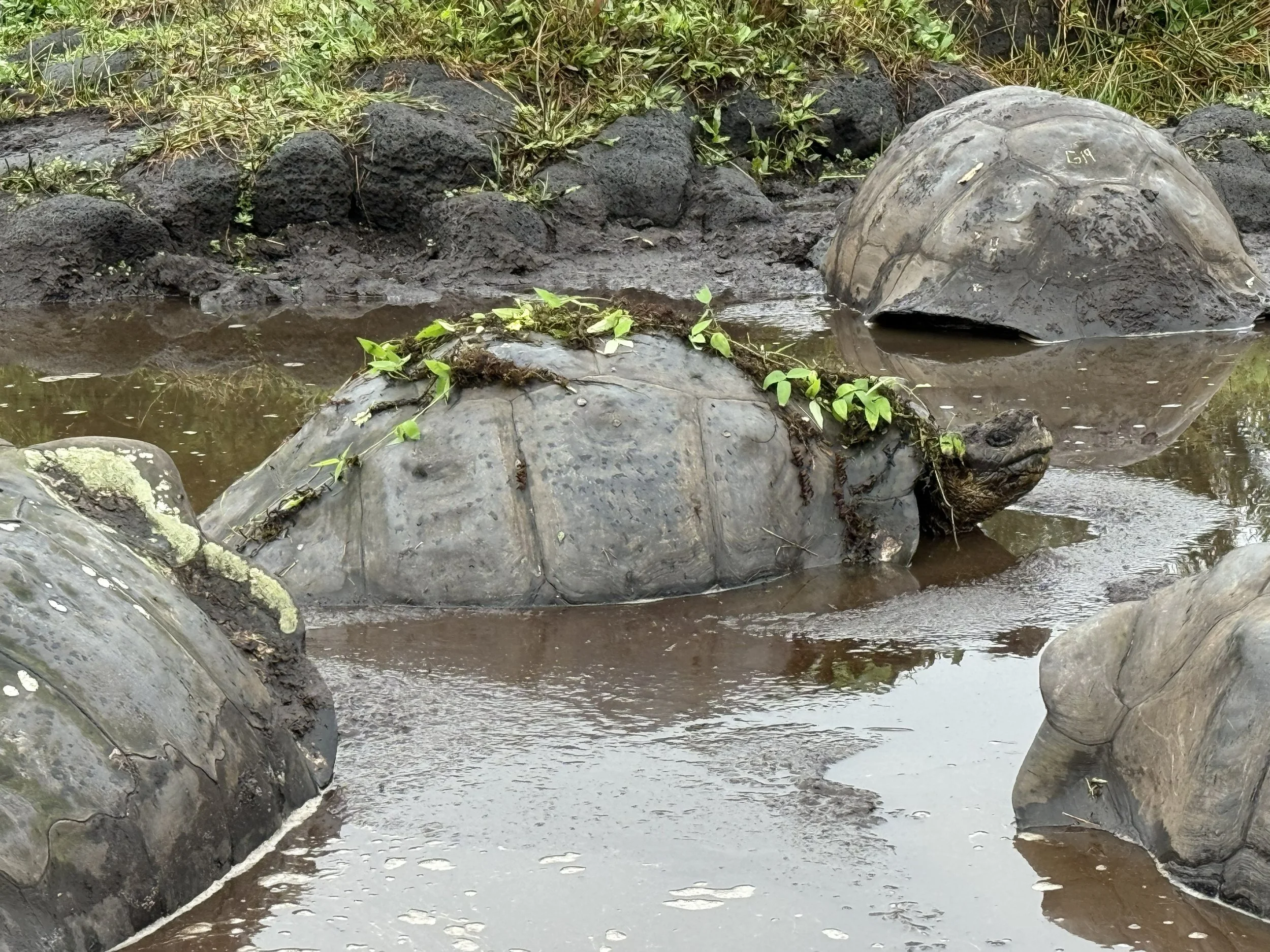
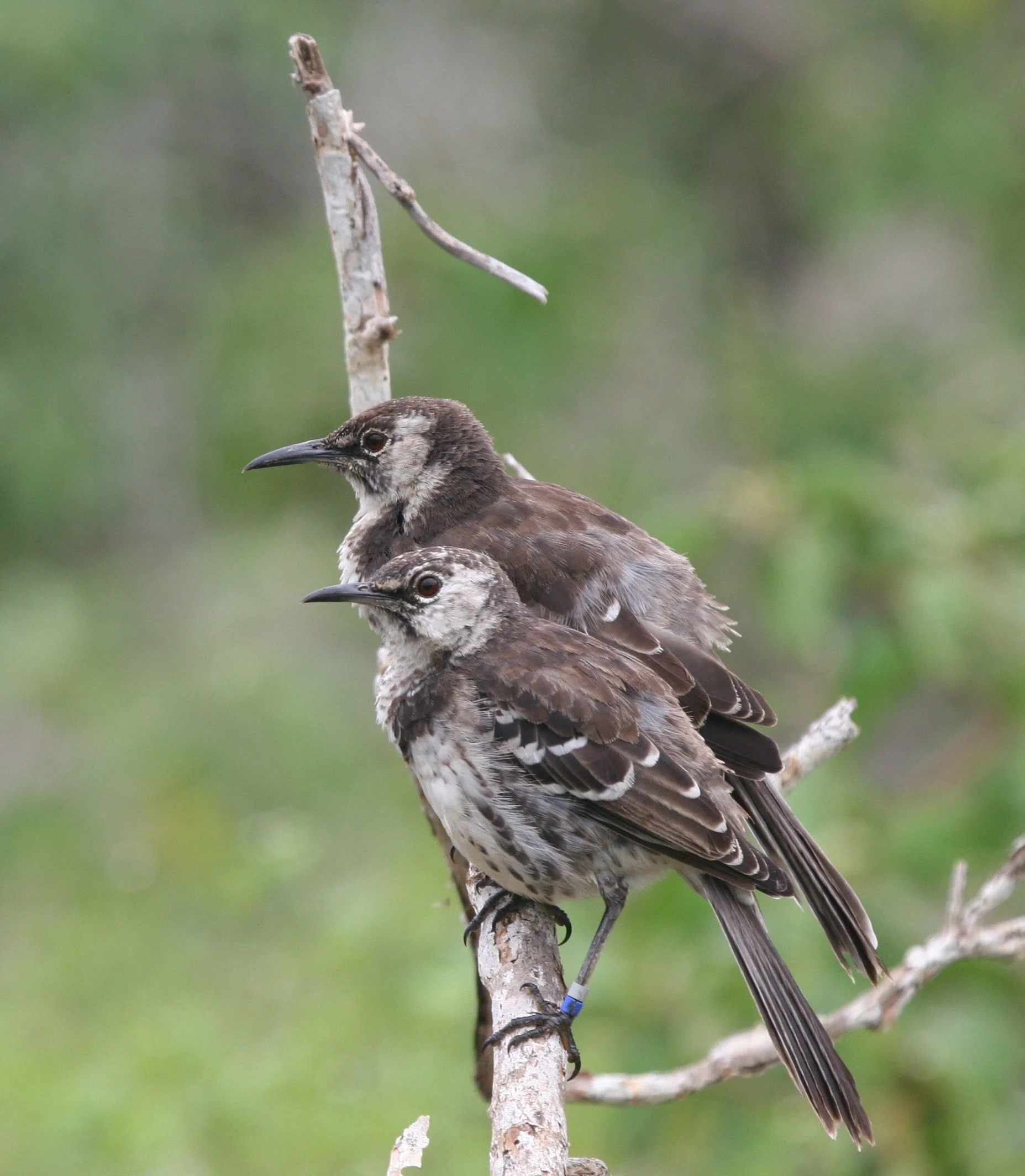
Floreana mockingbirds!
How it began
I arrived back to St. Louis Missouri (my current home) in mid-February following a few weeks in the Galapagos Islands. As many of you know, I have been working in the Galapagos since September 2007. My family and I lived there for three years, and since then I have taken annual trips to work on a variety of One Health projects. The first six years were almost solely dedicated to understanding the health threats and conservation challenges faced by endemic birds—think Darwin finches and my favorite the Floreana mockingbird—that call nowhere but the Galapagos home.
Then in 2013, I was lucky to become the principal investigator for the health component of the Galapagos Tortoise Movement Ecology Programme (https://www.darwinfoundation.org/en/our-work/land/giant-tortoise-conservation/). This early 2026 trip offered the chance to combine conservation work for both giant tortoises and endemic land birds. How lucky am I?
What it takes to climb a volcano
Our main mission was to spend a week on Santiago Island to collect samples from many different bird species, and the resident giant tortoise species—Chelonoidis darwini—to better understand their health. This may sound rather straight forward, and maybe even a little like everyone would love to take this “vacation.” However, you will have to trust me that it took months of planning and once ready to climb the volcano, a whole lot of energy as we spent a week chasing tortoises and mist netting birds.
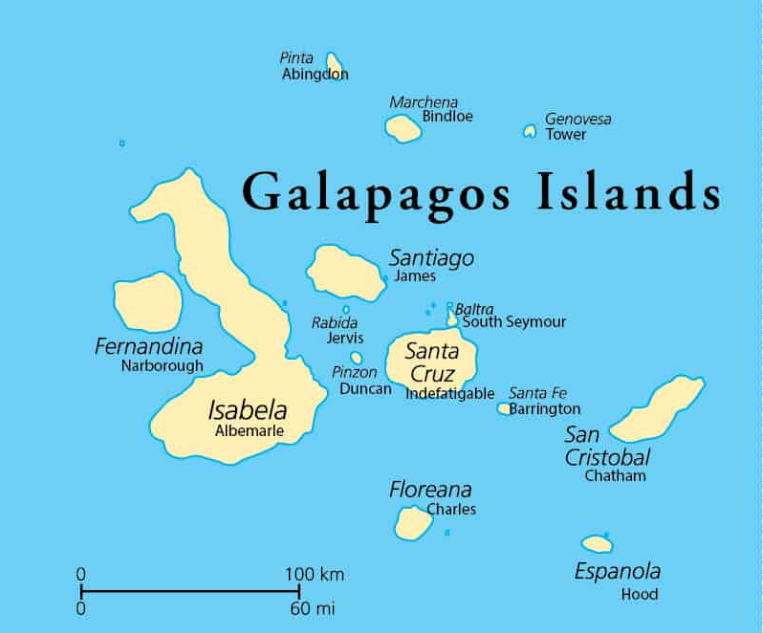
We started our trip at 4:30 AM on Santa Cruz Island and headed on foot to the dock (the famous Muelle of Academy Bay) so we could hop aboard the small motorboat, Invictus II (love the name!), to travel a few hours on the Pacific Ocean in our crossing to Santiago Island. It should be noted that most of our equipment had spent 72 hours in quarantine to ensure we wouldn’t be bringing any foreign plants or pests to the Island.
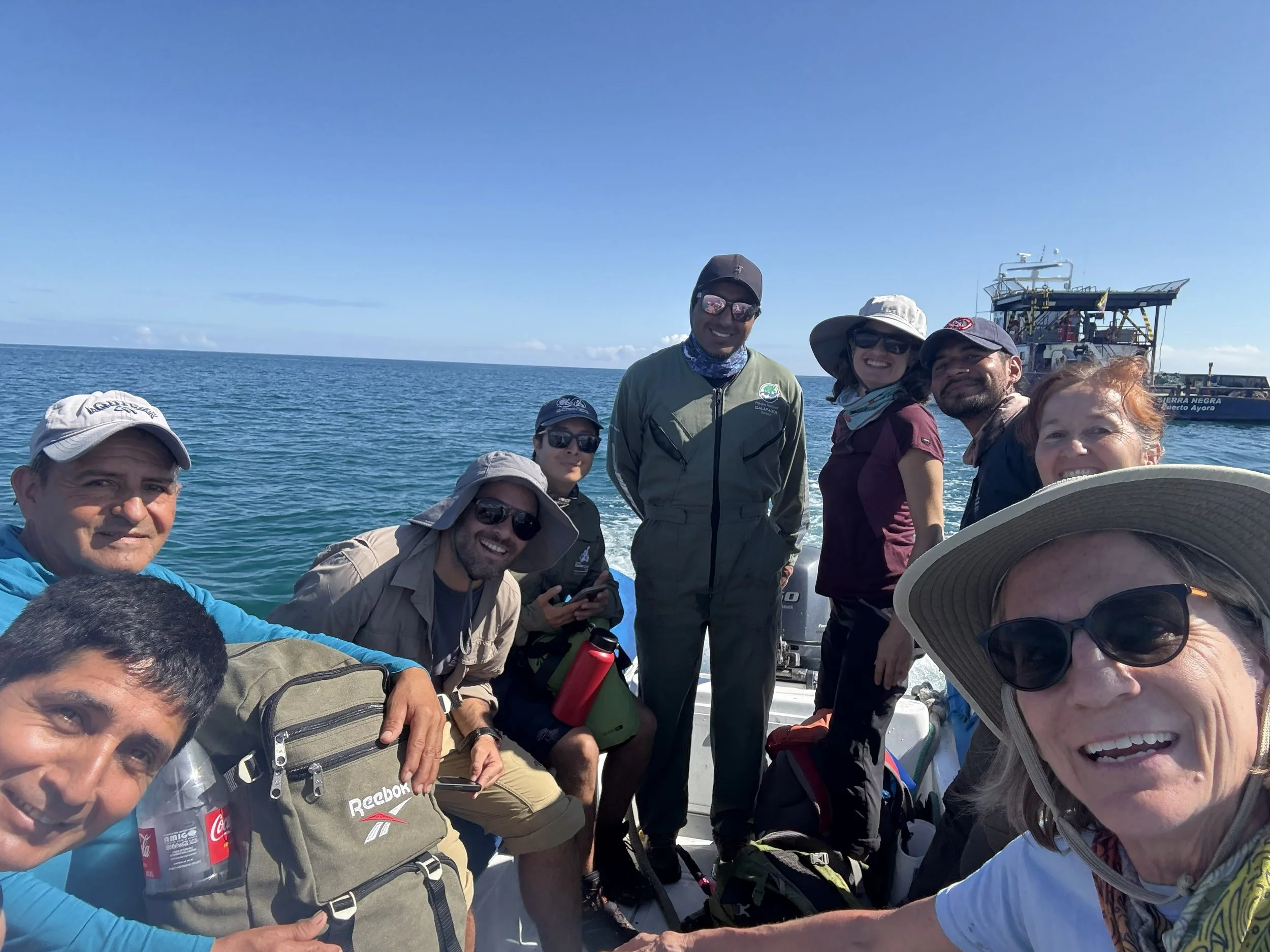
The team in the dinghy from the Invictus to Santiago.
As the Invictus II approached our Santiago landing site, I was surprised to find the Sierra Negra, the Galapagos National Park boat that I had worked aboard for a number of weeks in the early 2000s as we collected health samples from the famous penguins of the Galapagos. She was there just off shore waiting to pick up a few Park Guards and researchers that had been working on an island restoration project just prior to our arrival. They were heading down the volcano as we prepared to head up.
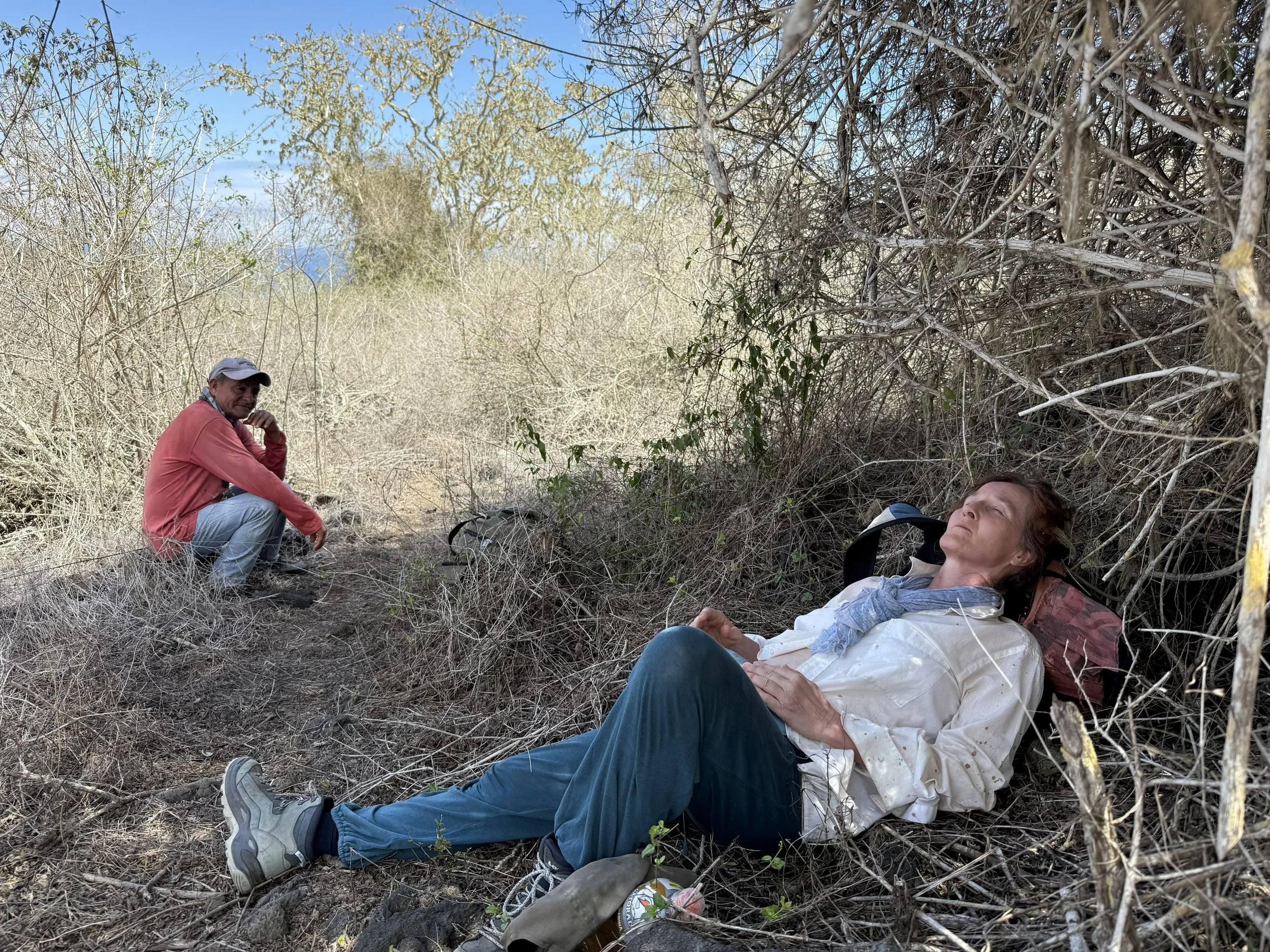
Birgit and Novarino and I taking a much needed rest in a little bit of shade.
By 9:30 AM our team was ready to start up the volcano. It was hot—like seriously hot—and there was lava everywhere—like serious lava. Four and a half hours later we were at the top of the Island and ready to set up camp at the Caseta.
Walking up the volcano I realized it was my first time back on Santiago since January 2009—17 years ago when I spent weeks studying Galapagos Hawks—Buteo galapagoensis (https://www.researchgate.net/publication/221749626_Health_evaluation_of_Galapagos_Hawks_Buteo_galapagoensis_on_Santiago_Island_Galapagos).
It felt so good to be back.
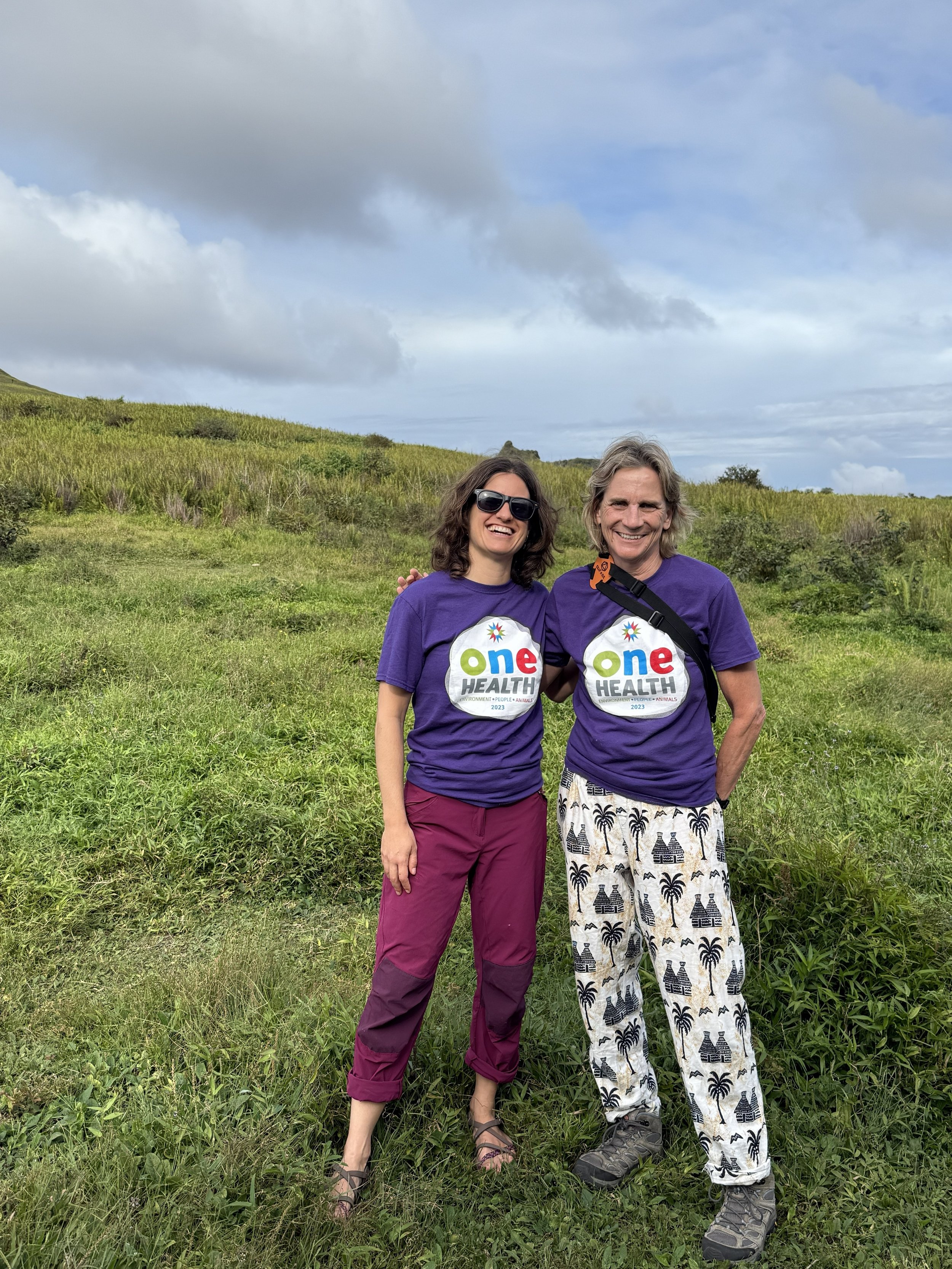
Dr. Ainoa Nieto Claudin and I on the first night, and after bucket showers following the climb up. #OneHealth
Contemplating tortoise time
Although, I was definitely back in a slightly older body and with slightly different world views, I still had my burning desire to understand threats to the health and conservation of the planet’s most endangered animals. I still want to find health clues that may be translated into conservation action. The small paperback I carried with me was Sy Montgomery’s Of Time and Turtles. What a perfect book to accompany me on this trip as I contemplated the passing of time—both tortoise time and human time—and contemplated how best to use my remaining time to help tortoises, birds and all the other amazing animal species of our planet survive into the future.
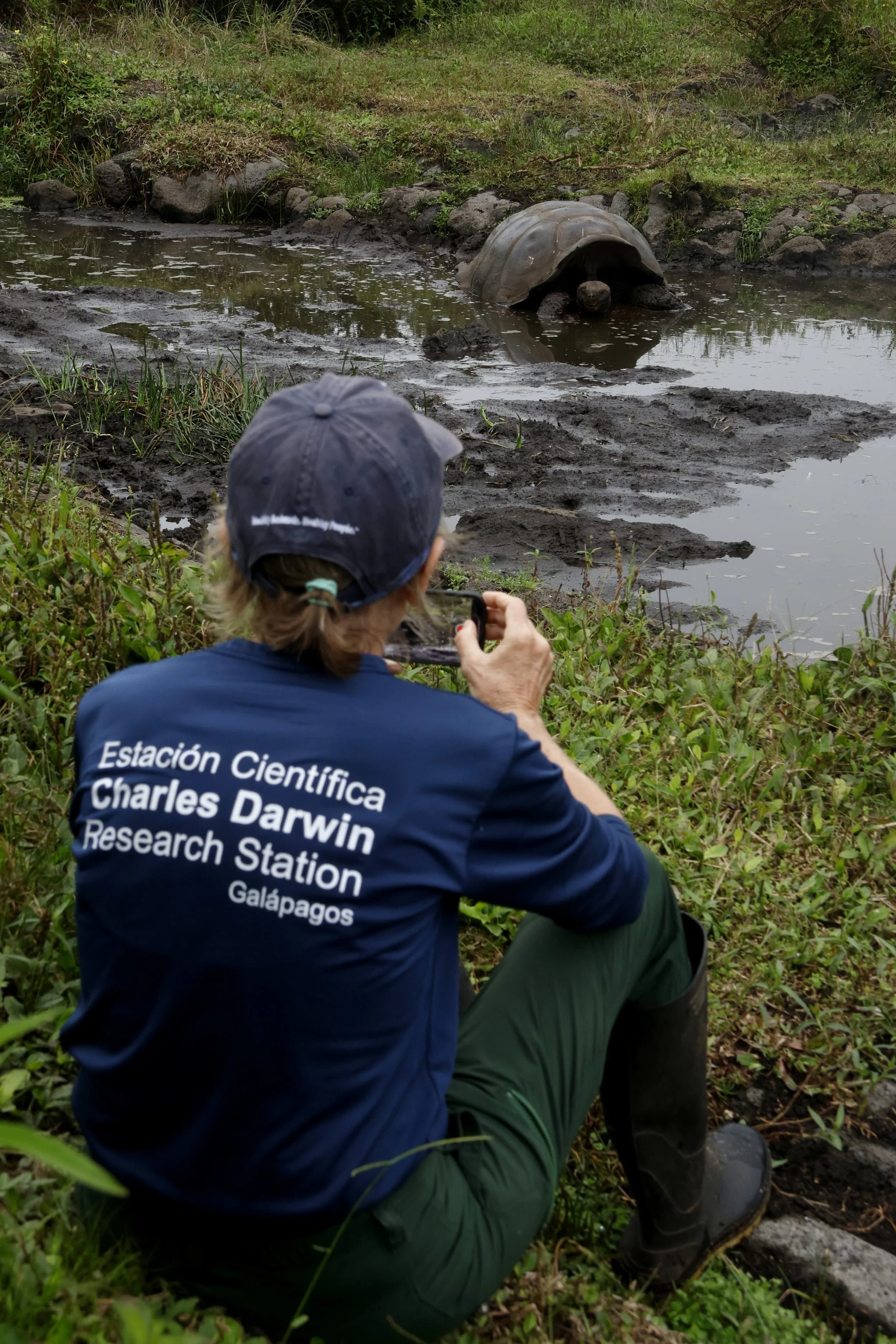
Contemplating tortoise time!
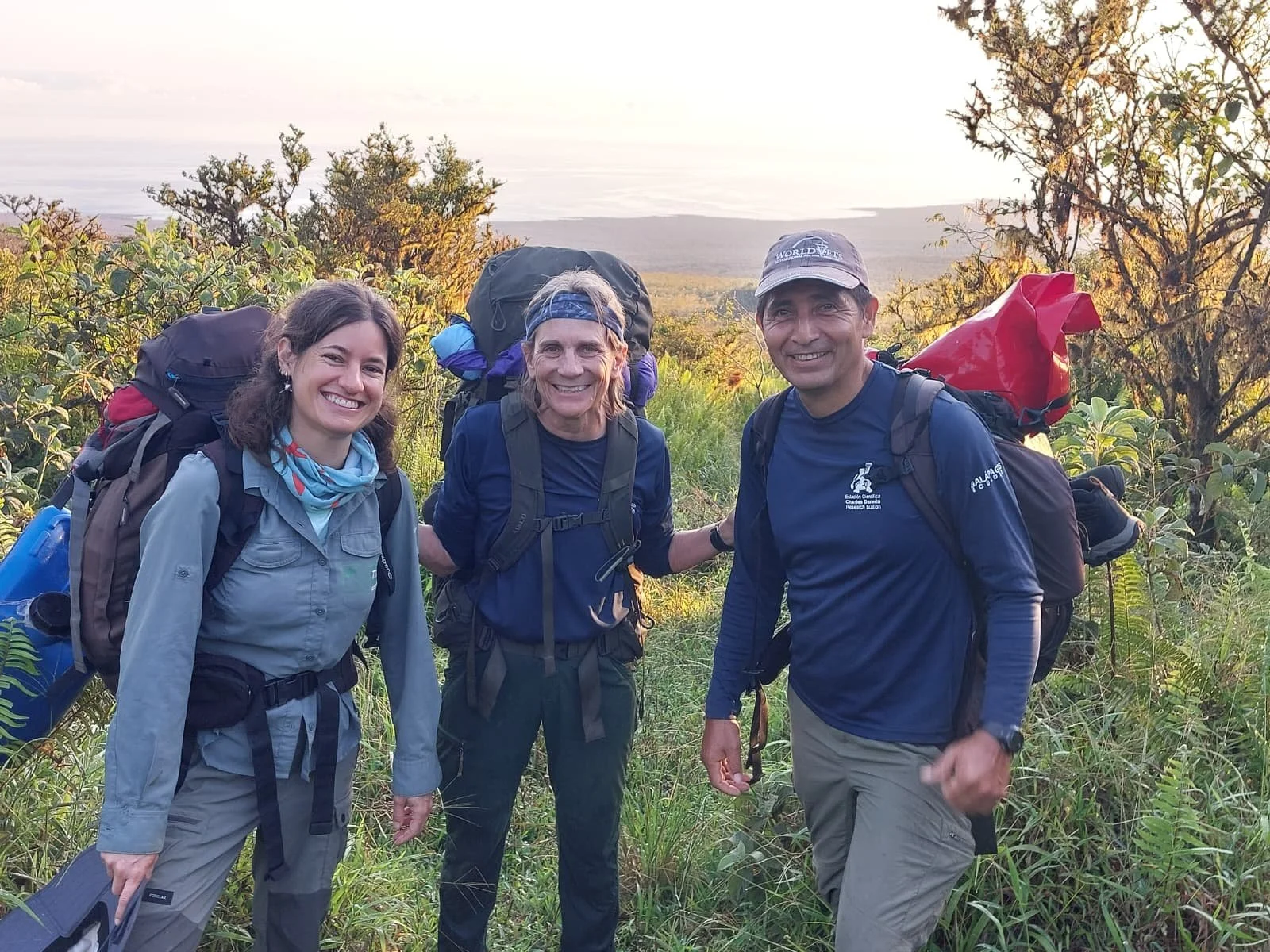
Ainoa, Freddy and I starting the walk down the volcano and back to Invictus II.
Back to “real life”
All in all, it was a very successful trip with the team completing health assessments of 60 tortoises and 75 birds. After our week on the top of the Island, we hiked back down, trying to beat the heat of the day. There at the edge of the ocean we met up again with the crew of Invictus II to be safely carried back to Santa Cruz Island.
Once back on Santa Cruz we left the100s of health samples at our laboratory. After some laboratory science using the polymerase chain reaction (PCR) machine (I call PCR machines, magic boxes!), we will have answers to questions on what infectious disease agents may be present in these species on Santiago. We have now done this on many islands and for a variety of species (see citations below). We undertook this trip since we felt it was time to learn about the health status of the animals of Santiago Island, and to give them their chance to visit with the doctor. Our team of conservation scientists continue to work together to ensure the long-term conservation of wildlife around the world. As I like to say, if we can’t save wildlife in the Galapagos, where will we save them?
A few of our Galapagos wildlife health citations are listed below. These and many more can be found on my ResearchGate site - https://www.researchgate.net/profile/Sharon-Deem
Citations
Deem, S.L., Rivera-Parra, J.L., and Parker, P.G. 2012. Health evaluation of Galapagos hawks (Buteo galapagoensis) on Santiago Island, Galapagos. J. Wildl. Dis. 48: 39-46.
Brunner, T.J., Deem, S.L., Stevens, C., Romano Noriega, J. and Nieto Claudin, A. 2025. Aphanoascella galapagosensis Shell Lesion Coverage of free-living Galapagos tortoises: Implications for Health and Conservation. Journal of Wildlife Diseases. 61: 297-307.
Nieto-Claudin, A., Pike, C.L., Mendoza-Alcívar, Fessl, B., Anchundia, D.J., Deem, S.L., Castaño, P.A., Apakupakul, K., Digby, R., Sacristán, C. 2025. Pathogen assessment of Galapagos landbirds reveals novel herpesviruses and adenoviruses. Acta Tropica. https://doi.org/10.1016/j.actatropica.2025.107955.
Nieto-Claudin, A., Esperón, F. Apakupakul, K. Peña, I., and Deem, S.L. 2021. Health assessments uncover novel viral sequences in five species of Galapagos tortoises. Transboundary and Emerging Diseases. Pp 1–11. https://doi.org/10.1111/tbed.14391
Mendoza-Alcivar, G., Deem, S.L., Esperón, F., Nieto-Claudin, A. 2025. Viral Prevalence in Galapagos Gaint Tortoises. Journal of Wildlife Diseases. 61: 542-547.